
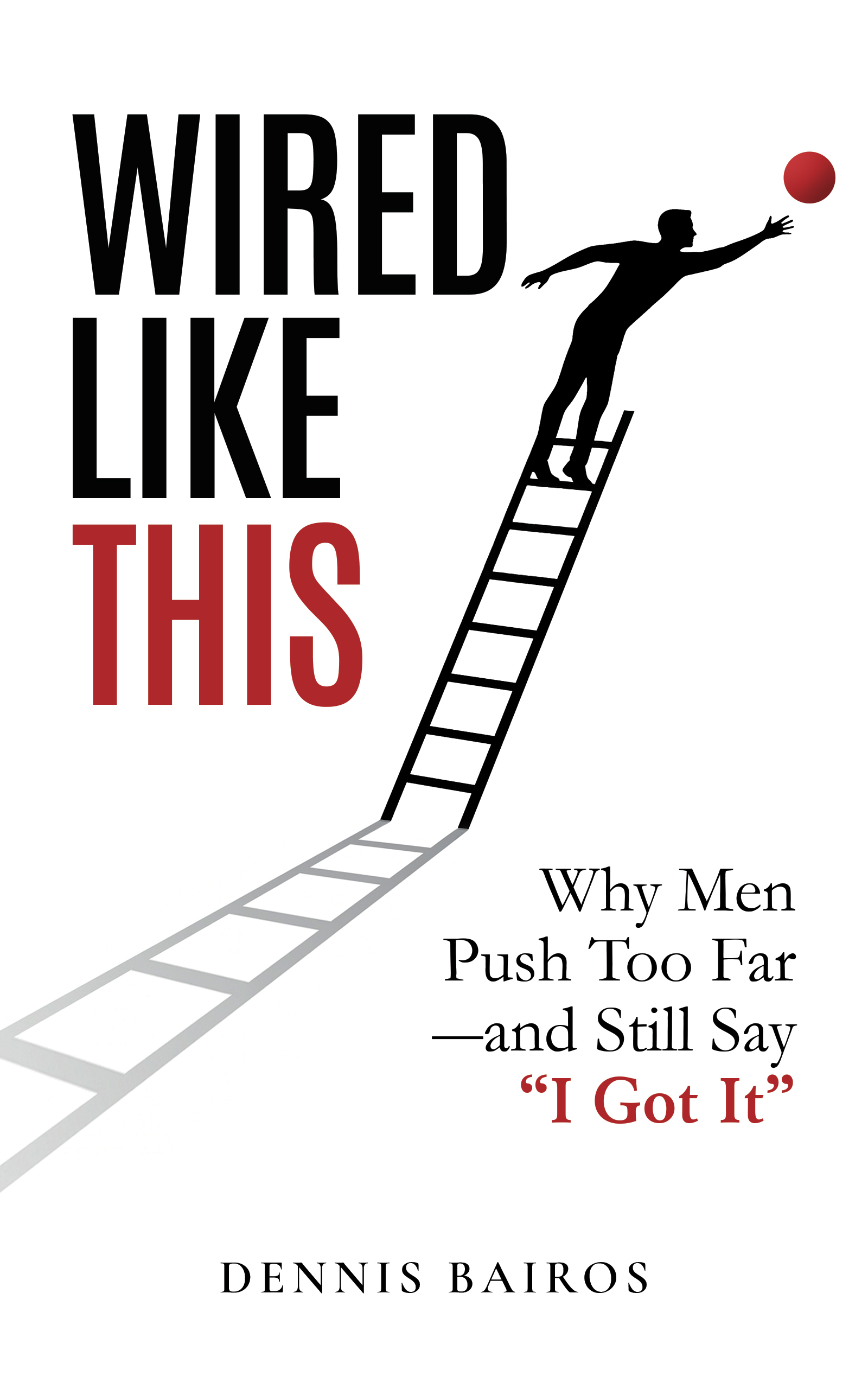
Royse City author Dennis Bairos released his first book, “Wired Like This: Why Men Push Too Far — and Still Say “I Got It,” which reached No. 1 Best Seller in the fatherhood category on Amazon within the first week of its release.
The book explores destructive patterns within men’s careers and parenting decisions, often pursued at the expense of their own wellbeing, through personal anecdotes and reflections. This collection of 27 short-form essays forces men and fathers to look inward and analyze that knee-jerk “I got it” response they give when feeling overwhelmed, a habit that prevents them from accepting help or admitting they are tired of being ‘on’ all the time.
Bairos is a father of three who moved from the East Coast to North Texas a few years ago. He balances his writing with his career as the Regional Vice President of Operations at EōS Fitness. In addition to releasing his debut book this year, he publishes blogs on Substack about fatherhood and navigating burnout.
“I’ve been enjoying writing blogs on a weekly basis, and I started a second blog recently that’s geared more towards, you know, people that are serious about their careers and I enjoy that,” Bairos said.
The idea to write a book began with a conversation he had with his wife. They were getting ready for bed when she told him that he overdoes everything.
“We were joking at that time and she hit me with that comment and she went on and said you obsess over everything, you don’t sleep well, you’re always working late, you burn yourself out and things like that.”
This conversation stuck with him, and he began to analyze his day-to-day actions, noticing the patterns his wife mentioned. He observed these tendencies while coaching his kids in youth sports, in his career, and at the gym.
His son began playing golf at a young age and around nine-years-old, he started to excel among his peers and showed a real promise in the sport. This included attending a nationals competition in Florida which he found nervewracking. When he returned, he had to advance to the next age group.
“He went from 8 to 9, which is a big gap,” Bairos said. “The holes get like 40 to 60 yards bigger and so for a small child from one month to the next, it’s a huge difference and that is when he started to struggle when playing.”
Initially, Bairos never had to push his son to practice, he was naturally independent, but now, he started to doubt himself. Bairos began to push him to practice harder, putting more pressure on him.
“He had never cried on the course once, ever,” Bairos said. “And almost every kid cries in sports at some point. Then there was one particular tournament that he was struggling, and I don’t know what got into me, but I started making comments to him after each hole; ‘This is why you have to practice’ ‘You haven’t been practicing enough.’”
This was a drastic change from Bairos’ usual encouraging attitude when it came to his son’s sports.
“I started to make more comments, more comments, and eventually one particular hole, he kind of cracked and got really emotional, and that’s when it hit me,” Bairos said. “I made it worse for him today. He didn’t need me and his ear about that, and so that was a big reflection point for me.”
His son eventually quit golf and has recently pursued other sports. Especially with his other kids, Bairos has consciously chosen to take a step back.
“I barely coach them,” Bairos said. “I just give them that space, and it’s made a huge difference in our relationships.”
Following his revelation, Bairos has begun to observe the relationships between father and child in youth sports.
“The level of intensity around youth sports is night and day here,” Bairos said. “Like, it’s highly competitive here in Texas compared to the east coast. I’ve never seen parents so amped up around youth sports until I moved to Texas.”
Through watching other fathers with their children after a game, Bairos recognized the same second nature instinct fathers have to critique their children. Bairos has found that other books in the self-help or fatherhood market often show the result of success without paying attention to the process it takes to get there.
“I think that people are tired of hearing the same advice where it all reverts to waking up earlier, doing more, working harder,” Bairos said. “I think where, where people get it wrong is that if they could do it, they would have already done it because they knew it would work. And I think that most people who are reading these self-help books are not in the right headspace to do that yet.”
Bairos has had fathers in his community approach him with the common sentiment that they were the same way.
“I get asked all the time, like, what’s your exact niche audience, and it’s a, it probably doesn’t make for good book sales, but it’s literally guys who don’t want to go read a book,” Bairos said.
As Wired Like This hits shelves in time for Father’s Day, he hopes his book serves as a mirror, giving men the chance to reflect upon their relationships and intuitions.