
You have heard the story a hundred times. Your great grandparents before they made their way to this country were in a small village. Leaving that place, they kept with them a small trinket. At the time, it was of little value, but now it had been passed down to your grandparents and parents making it a priceless sentimental family heirloom. As a kid though, it was something high on a shelf that you had never held in your hand and could not play with making it boring. On the other hand, the model airplane you received for your birthday was a top priority and prized possession. You took it on all kinds of adventures inside and outside the house. Then on one particularly exciting adventure inside the house, the plane left your hands, glided up as high as the shelf with the priceless family heirloom and the target was neutralized. Your ears still ring with the crash and your eyes can see the many pieces scattered over the floor. Now the priceless trinket could be shared by all the great grandkids, each receiving a broken piece.
Breaking things down or building them up was a common theme in Chemistry class. If you remember back to Chemistry class, there were two terms that related to changing substances, chemical or physical change. A physical change does not create a new substance and is often reversible like water changing into ice. On the other hand, a chemical change like wood burning produces a typically irreversible change. When the priceless heirloom falls crashing to the ground, it endures a change that is not easily reversed. Even with the best superglue, most of us would never be able to restore it to its former glory, but there are some who could do the job. The Repair Shop is a British tv series where they film at a repair shop out in the countryside of the UK with experts in ceramics, furniture, clocks, oil paintings, etc. fixing family heirlooms. It’s like a cross between the two tv series Antiques Roadshow and Home Improvement. The transformations of worn out or broken heirlooms to their former glory in the series bring most of the customers to tears. And we would be brought to tears of joy if we knew a place where we could find full restoration from all the broken moments of our lives.










A man named Jacob knew the pain of a broken life. Jacob had a twin brother named Esau. Esau was the firstborn, which afforded him many advantages at that time in history, and Jacob was always trying to get what was due his older brother. Jacob’s name means ‘heel grabber’ or someone who tries to trip the other up to get the advantage. On two major occasions, Jacob lived up to his name and succeeded at tricking his brother. First, he tricked him out of his birthright, which would be the greater part of the inheritance, when Esau was hungry for a bowl of lentil stew. Second, Jacob dressed in his brother’s clothes and with his mother’s help prepared an Esau style meal for their blind father, Isaac, tricking him into giving him the older son’s blessing to be lord over his brother. After the second trick, Esau was so angry, he planned to kill Jacob, but his mother and father sent him to his mother’s relatives in a distant country, Harran, to find a wife and wait for his brother’s angry to subside.
In Harran, Jacob found his uncle Laban. Jacob also found what he considered a priceless treasure in Laban’s beautiful daughter, Rachel. Jacob promised to work seven years to marry her. Then Laban tricked him on his wedding night by giving Jacob the older sister Leah instead. After Laban’s trick, Jacob was able to marry Rachel as well, but he had to work another seven years. During that time, Leah was able to have children, while Rachel was not, causing lots of conflict. After, his family started to grow Jacob decided to return home but did not have the resources leading him to cut a deal with Laban that he would keep the dark or spotted sheep and goats from Laban’s flocks. After shepherding the flocks for a while though, Jacob made sure there were more of that kind, which Laban noticed causing his attitude to change toward Jacob. So, Jacob made plans to leave with all his flocks and family without saying, “Goodbye.” When Laban found out, he pursued him but was warned by God not to harm him. When the two met, there was an incident of more deceit, but they parted ways peacefully.
Then, it was time for Jacob to see his brother again. He sent a few large gifts ahead to pacify his brother figuring he was still angry with him. Once he had sent his gifts and his family ahead, Jacob stayed behind on the bank of the Jabbok River. Then, we read in our Old Testament reading from Genesis 32, 24 So Jacob was left alone, and a man wrestled with him till daybreak. 25 When the man saw that he could not overpower him, he touched the socket of Jacob’s hip so that his hip was wrenched as he wrestled with the man. 26 Then the man said, “Let me go, for it is daybreak.” But Jacob replied, “I will not let you go unless you bless me.” 27 The man asked him, “What is your name?” “Jacob,” he answered. Jacob was close to one hundred years old at this time. He had been a foolish, selfish and dishonest heel grabber many times. He was afraid of what a reunion with his brother would bring and he could have been stuck feeling like a victim until the man came to wrestle him.
Our lives are more than a series of chemical and physical changes. Like Jacob, we live in a broken world. Sin broke this world changing the good and perfect creation of God into a deceitful, selfish mess. Sin broke us and brought separation between us and God. Like a chemical change, we cannot undo sin. When the reality of sin hits us hard in a moment, for a season of life or in a lingering lifelong way, we are tempted to get stuck identifying as a victim. Clues that we have been worn down or broken to the point of identifying as a victim are thinking that we do not have any worth to anyone. It includes believing we are alone and misunderstood. Also, believing bad things will continue to happen to us, having a negative mindset, blaming others and God for our circumstances, seeing no way out, and having an ‘everyone is against me’ mentality. With a victim mindset we see life like a chemical change, irreversibly broken. And we do not believe anything can heal us, so we find hope in anything as foolish as thinking you could pump exhaust back into a vehicle’s tailpipe and back through the engine to refill the gas tank and your wallet. When we get stuck believing we are victims, we run the risk of giving up wrestling with, holding onto and praying to God who alone can deliver us.
God changed our name from victim to victor. Jacob would not let God go because he was the only one who could deliver him from victim to victor. Decades earlier, God made Jacob a promise in Genesis 28, 13 … “I am the LORD, the God of your father Abraham and the God of Isaac. I will give you and your descendants the land on which you are lying. 14 Your descendants will be like the dust of the earth, and you will spread out to the west and to the east, to the north and to the south. All peoples on earth will be blessed through you and your offspring. 15 I am with you and will watch over you wherever you go, and I will bring you back to this land. I will not leave you until I have done what I have promised you.” God always keeps his promises, so Jacob would not let go of him. God knew Jacob’s name, what it meant and how he had lived up to it. But God gave him a new name in Genesis 32, 28 Then the man said, “Your name will no longer be Jacob, but Israel, because you have struggled with God and with humans and have overcome.” Jacob was able to struggle because God promised him a future, protection and deliverance through his offspring. The Greek translation of the Hebrew word ‘overcome’ is the same word translated as ‘power’ in Romans 1, 16 For I am not ashamed of the gospel, because it is the power of God that brings salvation to everyone who believes. This word is also the basis for our word, dynamite. Jacob’s power, ability and overcoming centered on God’s promise of the offspring who is the gospel, Jesus. Jesus who put up no fight or struggle when betrayed, arrested, falsely accused, beaten, rejected by the religious and secular rulers and crucified to irreversibly change us. We have been delivered from sin, death, hell, the devil, brokenness and victimhood by Jesus. As Jesus hung on the cross, he cried out from Psalm 22, 1 My God, my God, why have you forsaken me? Why are you so far from saving me, so far from my cries of anguish? Jesus was the victim of our sins having his body broken to save us. Jesus’ resurrection proves him victorious, and we are also victorious through Jesus.
Jacob had been transformed by God. He was humbled physically when God put his hip out of socket giving him a limp for the rest of his life, and he was humbled spiritually to rest on the power and promise of God, not his deceitful scheming. God wants us to wrestle with him in prayer as Jacob wrestled with him that night. When we are tempted to identify as victims and doubt the promises and power of God, we have Jesus’ encouragement to pray in our Gospel reading from Luke 18, 1 Then Jesus told his disciples a parable to show them that they should always pray and not give up. 2 He said: “In a certain town there was a judge who neither feared God nor cared what people thought. 3 And there was a widow in that town who kept coming to him with the plea, ‘Grant me justice against my adversary.’ 4 “For some time he refused. But finally he said to himself, ‘Even though I don’t fear God or care what people think, 5 yet because this widow keeps bothering me, I will see that she gets justice, so that she won’t eventually come and attack me!’” 6 And the Lord said, “Listen to what the unjust judge says. 7 And will not God bring about justice for his chosen ones, who cry out to him day and night? Will he keep putting them off? 8 I tell you, he will see that they get justice, and quickly. However, when the Son of Man comes, will he find faith on the earth?” Jesus used the extremes of a godless apathetic judge and a widow who would have had little legal status or value to her society to make his point to us to keep praying. Jesus wants us filled with faith in him to be sure that we have eternal life knowing he is the good Judge and we are treasured by him, and so that we have endurance through and deliverance from our trials in this world as we read in our New Testament reading from 1 John 5, 13 I write these things to you who believe in the name of the Son of God so that you may know that you have eternal life. 14 This is the confidence we have in approaching God: that if we ask anything according to his will, he hears us. After Jacob wrestled with God, he still had a limp and his relationship with his brother was still characterized by deceit, but he prayed with the promises God made him, and God delivered him and from him, Israel, was born our Savior. We may walk through life with limps and losses, but the hope, healing, endurance, deliverance, peace, optimism, belonging and listening powerful friend we have in Jesus remains.
Many families have precious heirlooms they hope to pass down to the next generation. Many families also have stories of a priceless heirloom being broken. The greatest heirloom to pass down that cannot be destroyed by a physical or chemical change is Jesus. The power of God, the Gospel promise of our Savior Jesus descended from Israel who sacrificed his life on the cross for our sins and was raised to life for our justification has delivered us from this broken world. Jacob, renamed Israel, wrestled with God for the promise of his deliverance and he was delivered. God encourages us to hold onto him and wrestle with him in prayer through our trials, confident that even if our limps and loses remain in this world, we will be fully restored in heaven. Confident in our Savior, we wrestle with God in prayer. Amen.
Gunnar Ledermann, Pastor Divine Peace Church
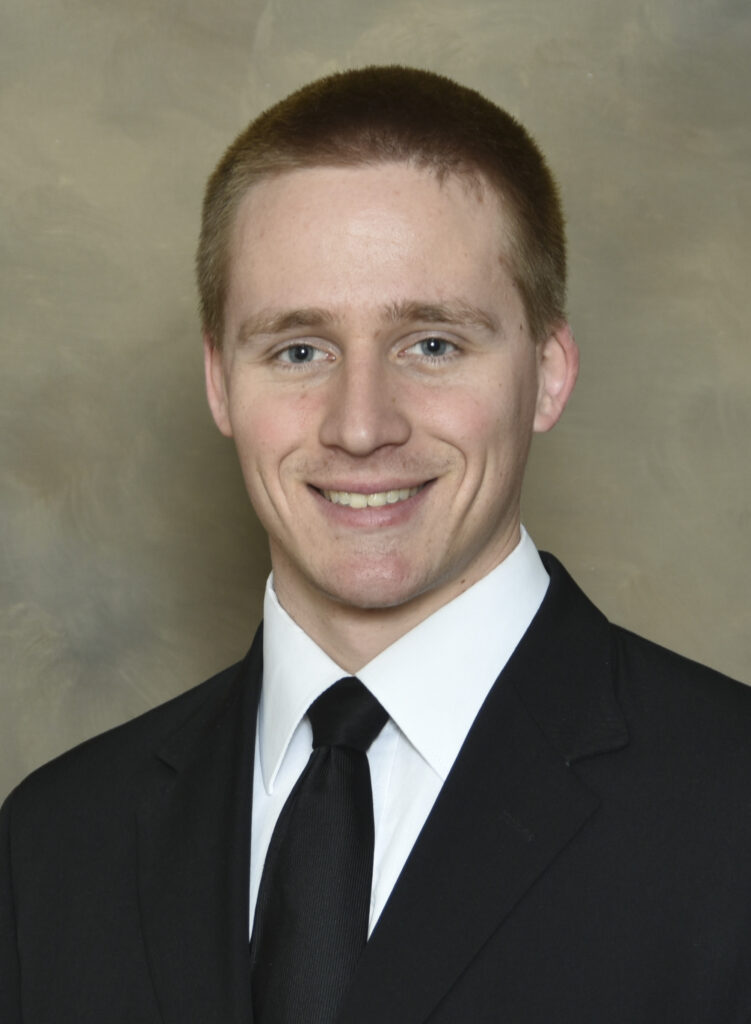
Gunnar Ledermann
I’m passionate about Rockwall’s vibrant community and actively engage with local non-profits and community organizations, including the Rockwall Chamber of Commerce, the City of Rockwall, and the Downtown Rockwall Association. My background includes a bachelor’s degree in Classical Languages and a master’s degree in divinity. Currently serving as a pastor at Divine Peace Church in Rockwall, I also enjoy spending time with my wife, Marinda, and our five children.